By the Book: Live in Phuket, work abroad

PHUKET: There is a growing trend in Phuket for expats in Southeast Asia to relocate their families here while commuting to work in major cities such as Singapore, Hong Kong, KL and Bangkok.
Phuket’s international airport provides regional business people convenient access to multiple destinations at low costs. Therefore, the option of using Phuket as a base to do business throughout the region is a viable one.
The living standards, cost of living and infrastructure that Phuket has to offer is a major draw for families who would otherwise be living in much smaller and more expensive properties in locations such as Singapore and Hong Kong.
For the price of a two bedroom condo in Singapore, a family could own or rent a four-plus bedroom villa with a private pool in Phuket. Phuket offers first class schooling, international medical care, good infrastructure, fantastic beaches, numerous leisure activities, a low cost of living, great dining, a large expat community and a lifestyle that many crave.
Families often require spacious accommodation with at least four bedrooms, a large pool and garden, a good location and a secure environment.
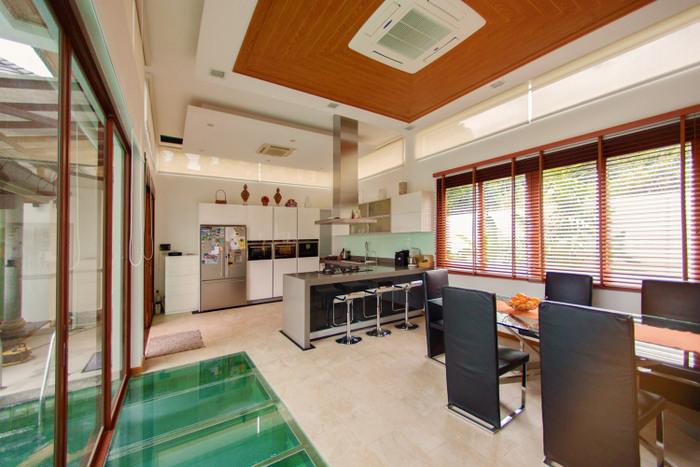
A great example of this type of property is the four bedroom freehold villa pictured here. It sits in a quiet, residential area known for its high-end properties. The spacious property (800sqm) features mature gardens and the internal area is 450sqm.
It is an ideal family home, perfect for entertaining and suitable for pets due to its high walls.

The large, U-shaped kitchen includes modern, gloss-white cabinetry with high-end appliances. The attached breakfast bar/work space seats three. The kitchen flows into the large dining area. The lounge has vaulted ceilings and opens out onto the spacious pool terrace with a large 54 cubic meter swimming pool, an external Jacuzzi and a sala perfect for outside dining and entertaining.
The roof terrace sala offers another option for entertaining or just relaxing. It hosts a small prep kitchen, a dining area and a seating area, all with expansive sea views.
Three of the bedrooms have en suite bathrooms. The master suite hosts a walk-in wardrobe. The bedroom also has a walk-out balcony that offers great sea views.
The house is finished in a modern style with excellent attention to detail. The floors throughout are made of teak. The bathrooms are finished in tile and granite. The ceilings are quite high, lending a peaceful, cool airy feeling.
In addition, there is also a maid’s room and a laundry room. The spacious car port will accommodate two cars and has an automatic gate.
The villa has both a home security system and estate security with a guard at night.
The price has been reduced to sell quickly, which brings us on to another current hot topic in Phuket’s property market. The seller is Russian and has seen a dramatic devaluation in the rouble. This property was originally bought for almost 30mn baht but the seller is currently able to offer it for only 19mn baht and would still walk away from such a sale without losing money in rouble terms. This really is a great opportunity for a buyer to purchase a property at well below its appraised market value.
For more information, contact: Kevin Hodges at Siam Real Estate and quote ref HSSV6018. Tel: 076-324042; Email: kevin@siamrealestate.com. Web: siamrealestate.com
— Kevin Hodges
Latest Thailand News
























Follow The Thaiger on Google News: