Consumer council calls for 20-baht Green Line fare

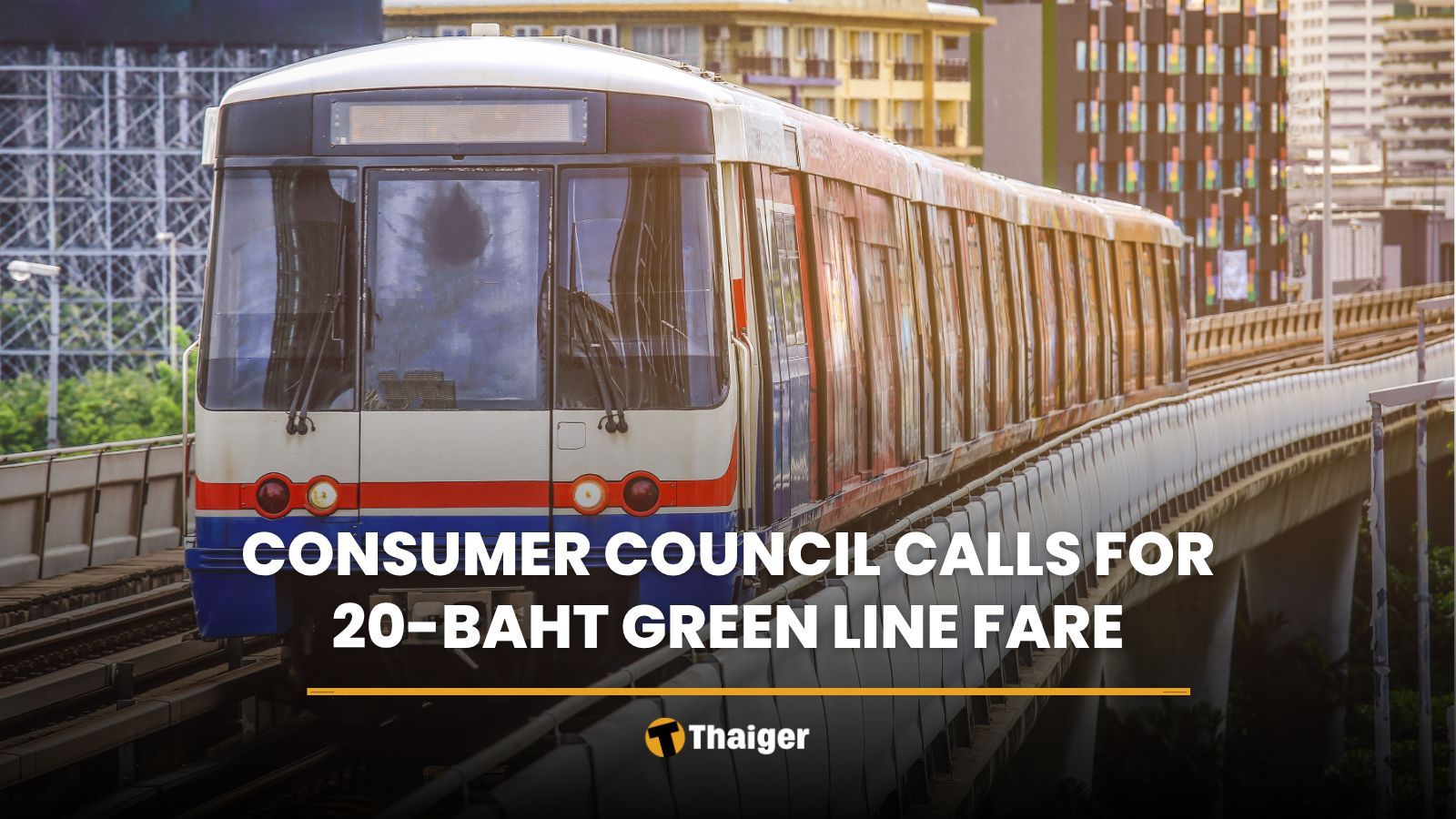
The Thailand Consumers Council (TCC) is pushing for a fixed 20-baht fare on Bangkok’s Green Line electric railway, alongside a broader restructuring of mass transit pricing aimed at boosting ridership by 50% and cutting household living costs.
TCC secretary-general Saree Aongsomwang made the call during a press briefing titled “Green Line After 2029: Study Shows 20-Baht Fare Feasible,” arguing that urban rail should be treated as a public service rather than a private commodity. She said affordable transport is essential to quality of life in the city.
With the Green Line concession set to expire in 2029, Saree described the upcoming decision on future management as a pivotal moment, one that will shape fare structures for years to come. She said policymakers must weigh both economic efficiency and fairness to consumers.
The Green Line currently carries over 700,000 passengers daily, nearly half of all rail users in Bangkok. Fares range from 17 to 65 baht per trip, adding up to an average monthly commuting cost of around 3,000 baht. The TCC argues transport costs should not exceed 10% of an individual’s income.
Saree said a flat 20-baht fare is achievable with the right policy framework and could increase ridership by more than 50% while lowering household expenses.
To fund the plan, the council proposed establishing a public transport fund financed by 40% of vehicle tax revenues, estimated at 6.4 billion baht annually. Other proposals include an integrated ticketing system to eliminate repeated entry fees and the expansion of feeder services such as electric buses.


Sanyalak Panwatthanalikhit, a law lecturer from Sripatum University, outlined four post-concession management options: extending the contract of current operator Bangkok Mass Transit System Public Company Limited (BTSC); launching a new bidding process; placing the system under Bangkok Metropolitan Administration management; or transferring control to the Mass Rapid Transit Authority of Thailand (MRTA).
The study found that both retaining the current operator and transferring to the MRTA offer strong financial, economic, and social returns. The MRTA option could particularly improve system integration and support future joint ticketing across rail networks.
Researchers concluded that a 25-baht fare could be introduced immediately with favourable cost-benefit results, while achieving the 20-baht target would require additional subsidies. The current average fare of 34 baht per trip would need to fall by around 14 baht to reach that goal, reported Bangkok Post.
Latest Thailand News

























Follow The Thaiger on Google News: